Step 1: Head-to-head points
The first check is the greatest number of points obtained in the group matches between the teams concerned.

Home / World Cup 2026 Tiebreak Rules
World Cup 2026 Tiebreak Rules
World Cup groups can look simple until teams finish level on points. That is when the tiebreak rules decide who finishes higher, who advances, and which third-placed teams continue to the Round of 32.
This page explains the 2026 tournament tiebreak order in a clearer format, and shows why many fans prefer using an Excel workbook instead of trying to calculate every scenario manually.
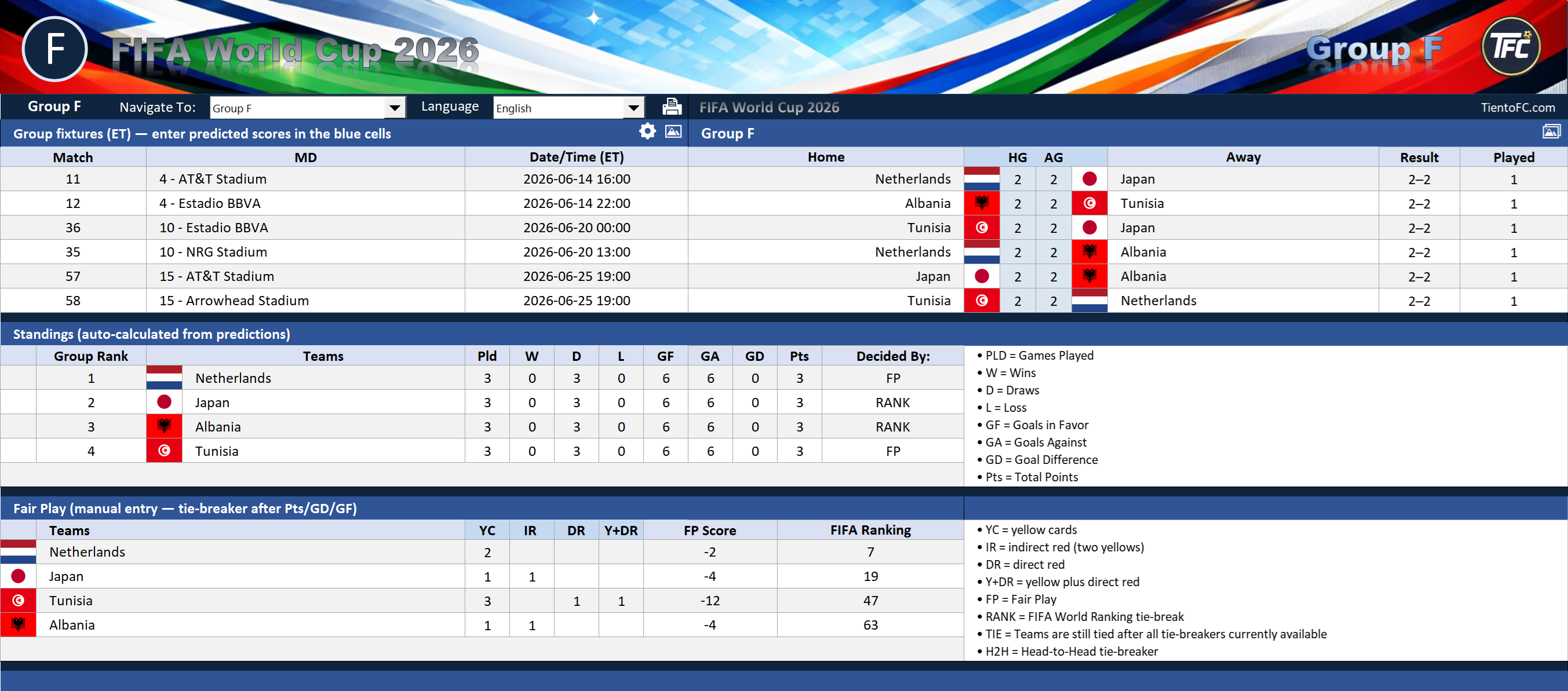
If two or more teams in the same group finish level on points after the group stage, FIFA starts with the matches played between the tied teams themselves. Only after that does it move to broader group-wide measures and then ranking-based fallbacks.
The first check is the greatest number of points obtained in the group matches between the teams concerned.
If the teams are still tied, FIFA compares goal difference from the matches between those tied teams.
If needed, FIFA then looks at the number of goals scored in the group matches between the tied teams.
If teams are still level after those first checks, FIFA reapplies the same head-to-head criteria only to the teams that remain tied.
If that still does not separate them, FIFA moves to overall group goal difference and then overall goals scored.
If teams still cannot be separated, FIFA uses the team conduct score from cards, and finally the FIFA/Coca-Cola Men’s World Ranking.
The TientoFC workbook is built to help fans follow standings, tiebreak logic, and bracket progression in one Excel file.
Go to Buy PageIf the ranking still is not settled after the football-based criteria, FIFA uses a conduct score based on disciplinary sanctions.
Only one deduction applies to a player or team official in a single match. The team with the highest conduct score ranks higher.
In the 48-team format, the top two teams from each group advance, and the eight best third-placed teams also move on to the Round of 32.
Those third-placed teams are ranked separately by overall points, overall goal difference, overall goals scored, team conduct score, and then the FIFA Ranking if needed.
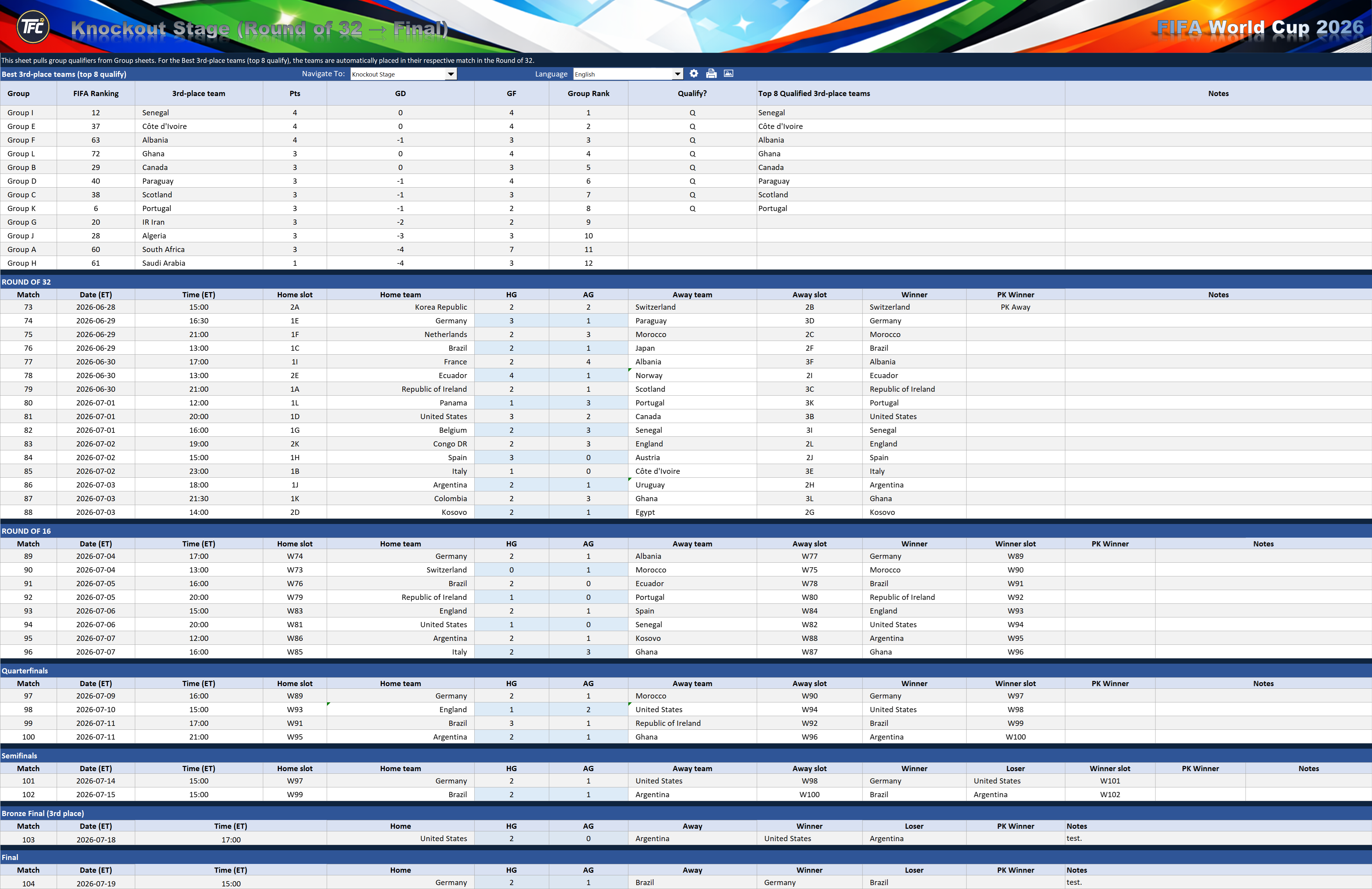
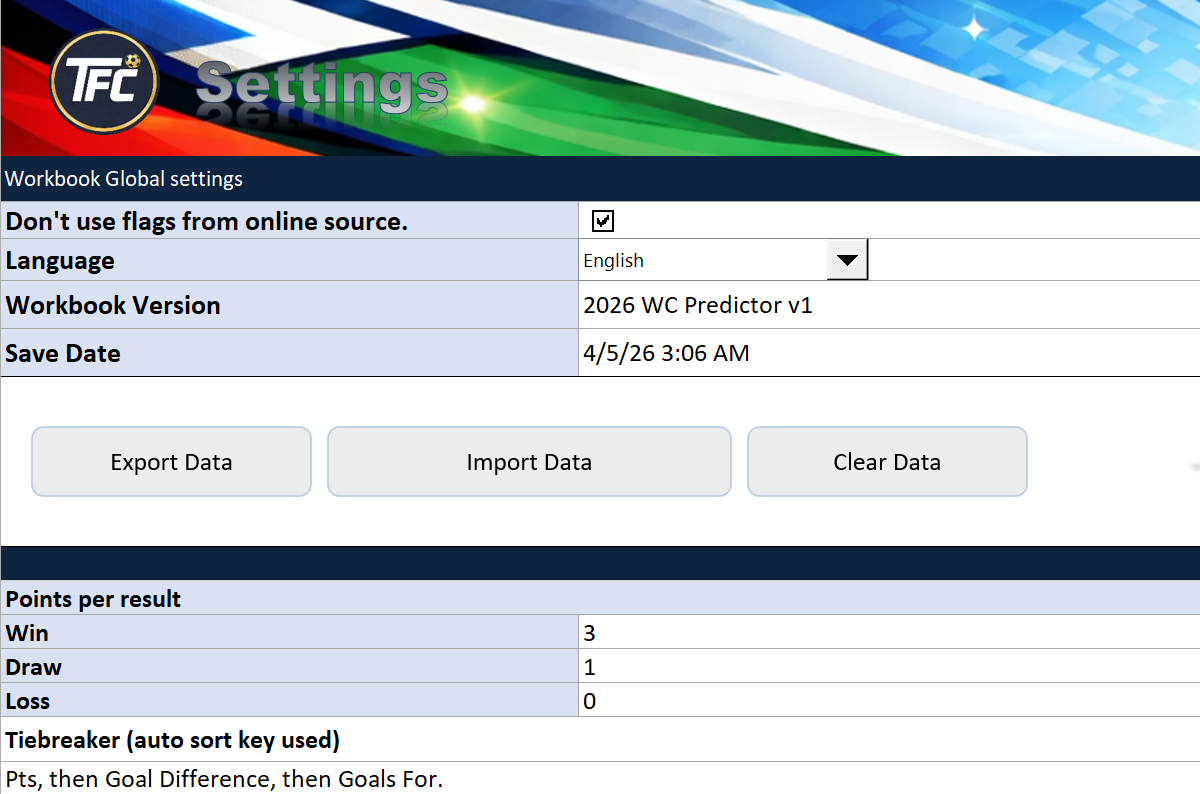
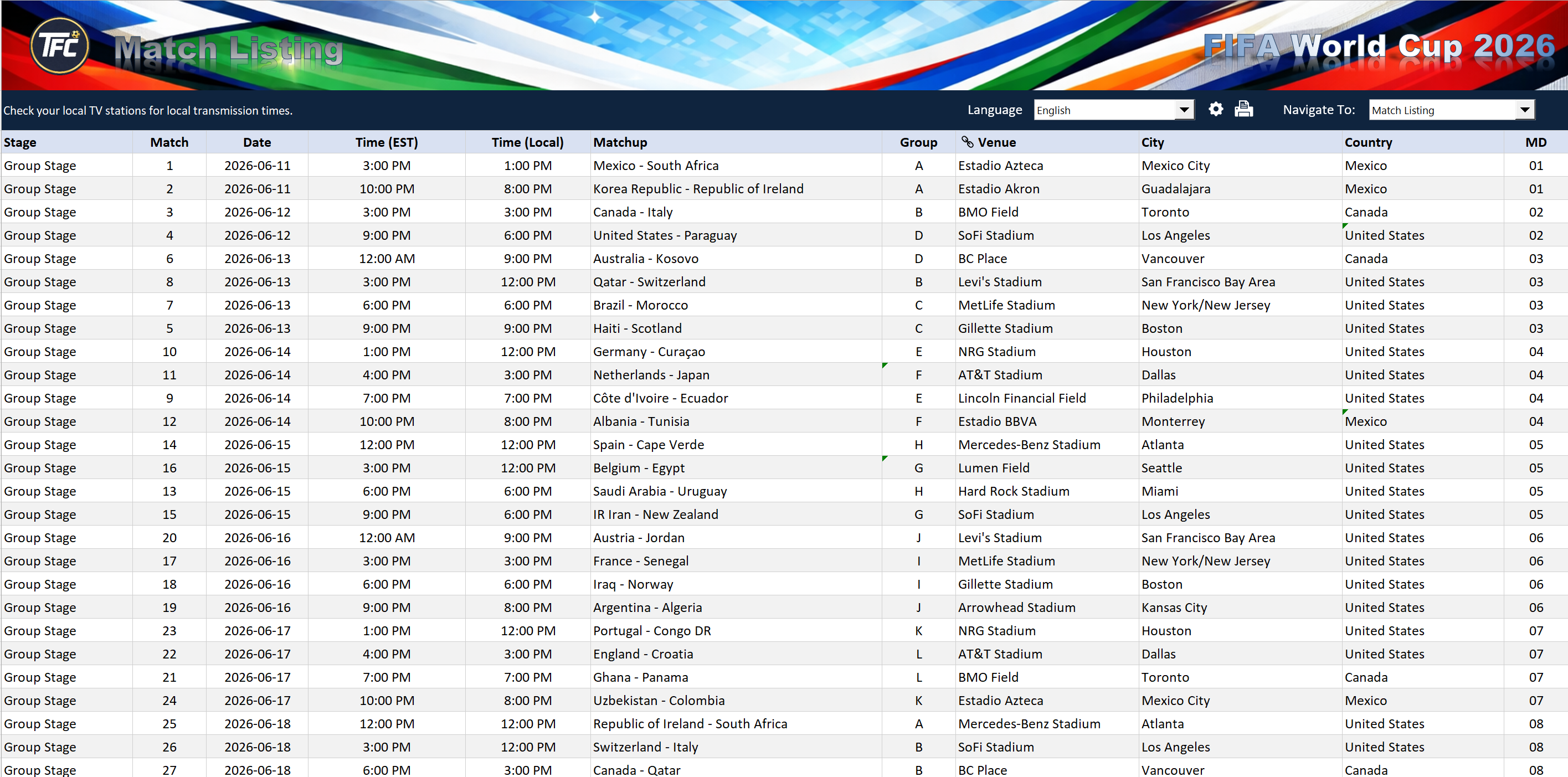
The tricky part is not knowing that tiebreak rules exist. The tricky part is following them in the right order when several teams are still tied after each step.
That gets even harder when you also need to compare third-placed teams across multiple groups and then map them into the Round of 32 bracket.
Many fans search for World Cup tiebreak rules because they want to predict who advances. A purpose-built workbook helps combine match input, standings, tiebreak tracking, and knockout progression in one place instead of using separate notes or static charts.
See the Excel Bracket PageYes. FIFA first compares the tied teams using head-to-head points, head-to-head goal difference, and head-to-head goals scored.
FIFA can reapply the head-to-head checks among the remaining tied teams, then move to overall goal difference, overall goals scored, team conduct score, and FIFA Ranking.
They are ranked by overall points, overall goal difference, overall goals scored, team conduct score, and then FIFA Ranking if needed.
Yes. If football-based criteria still do not separate teams, FIFA uses a card-based team conduct score as one of the tiebreak steps.
A structured Excel workbook can make standings, tiebreakers, and Round of 32 qualification easier to follow than doing it manually.
If you want a simpler way to follow group rankings, best third-placed teams, and knockout qualification, the TientoFC workbook gives you a cleaner structure for it all in Excel.